SFCCO

SAN FRANCISCO COMPOSERS CHAMBER ORCHESTRA
Presents "How Suite It Is" at Old First Concerts
Saturday, September 15th, 2007 at 8 pm

Old First Presbyterian Church
1751 Sacramento Street/Van Ness, San Francisco, CA 94109

PROGRAM
Mark Alburger, John Kendall Bailey and Martha Stoddard conducting


Beeri Moalem

Desires    Program Notes

Clare Twohy Music for flute, clarinets, bassoon and strings  

John Beeman

Free Form    Program Notes

Michael Cooke, Alto Saxophone

Lisa Scola Prosek

Music from the Opera “Trap Door”   Program Notes

I.
II.

David Graves

Life Is Like That     Program Notes

intermission


Mark Alburger

The Pied Piper Suite: Concertino for Orchestra   Program Notes

I. Air ("Into the Street")
II. Menuet ("You Should Have Heard")
III. Badinerie ("No Trifling")
IV. Pavanne ("Once More")
V. Rondeau ("The Wonderful Music")

Mark Alburger, spoken word

Erling Wold

Mordake Suite     Program Notes

Loren Jones

Dancing On the Brink of the World San Francisco - 1600 to The Present   Program Notes

 9.  Playland - 1920’s
11. North Beach - 1950’s
 8.  Earthquake and Fire - 1906

Alex Lu, piano
Enzo Garcia, accordion and saw

Click on the links to listen to the music.
If you don't have Microsoft Media Player, click here to download.

PERFORMERS
 

Flute
Bruce Salvisberg
Harry Bernstein

Oboe
Philip Freihofner

Clarinet (Bass Clarinet**)
Rachel Condry **

Bassoon (ContraBassoon**)
Michael Cooke
Michael Garvey
Lori Garvey**

French Horn
Cathleen Torres


Trumpet
Rob Wilkinson

Piano
Lisa Scola Prosek
Davide Verotta

Synthesizer
David Graves
Erling Wold

Harp
Esther Lee

Percussion
Victor Flaviani
Anne Szabla


Violin I
Monika Gruber
Clare Twohy

Violin II
Hande Erdem

Viola
Beeri Moalem

Cello
Farley Pearce
Beth Snellings

Bass
John Beeman


Composer and pianist Alexander Lu is a graduate of the Biola University Conservatory of Music in La Mirada, California, where he earned a B.M. in composition and a B.M. in piano performance. He has also studied composition at the Roehampton University in London and more recently, spent the summer of 2006 in the European American Musical Alliance composition program at the Ecole Normale de Musique, Paris. A versatile pianist, Alex has performed solo and with various choruses, jazz ensembles, classical chamber groups, and rock/pop bands in the Los Angeles and Bay Area. He has also been featured as pianist in various film scores. Alex's music has been performed by the San Francisco Conservatory Chorus, Pasadena Young Musicians Orchestra, South Bay Children's Choir, West Hollywood Chorale, among others. He is currently pursuing a masters degree in composition under David Conte at the San Francisco Conservatory of Music.

Enzo Garcia has been a professionally performing musician for 10 years. He is a singer and a songwriter who accompanies his voice with guitar, accordion, 5-string banjo, harmonica and saw. His abilities as an instrumentalist, sideman and solo performer allow for him to adeptly present his material as a soloist or a bandleader. Over the course of just a few years, San Francisco-based Enzo Garcia has released nine albums of original reworkings of traditional and original kid's songs, and leads a popular local family folk music show every Sunday morning, Breakfast with Enzo.

SFCCO Composers Biographies


Michael Cooke

The multi-instrumentalist Michael Cooke is a composer of jazz and classical music. This two-time Emmy, ASCAPLUS Award and Louis Armstrong Jazz Award winner plays a variety of instruments: you can hear him on soprano, alto, and tenor saxophones, flute, soprano and bass clarinets, bassoon and percussion. A cum laude graduate with a music degree from the University of North Texas, he had many different areas of study; jazz, ethnomusicology, music history, theory and of course composition. In 1991 Michael began his professional orchestral career performing in many north Texas area symphonies. Michael has played in Europe, Mexico, and all over the United States. Cimarron Music Press began published many of Michael's compositions in 1994. After relocating to the San Francisco Bay Area, he has been exploring new paths in improvised and composed music, mixing a variety of styles and techniques that draw upon the creative energy of a multicultural experience, both in and out of America. In 1999, Michael started a jazz label called Black Hat Records (blackhatrecords.com) and is currently on the Board of Directors of the San Francisco Composers Chamber Orchestra. The San Francisco Beacon describes Michael's music as "flowing out color and tone with a feeling I haven't heard in quite a while. Michael plays with such dimension and flavor that it sets (his) sound apart from the rest." Uncompromising, fiery, complex, passionate, and cathartic is how the All Music Guide labeled Michael's playing on Searching by Cooke Quartet, Statements by Michael Cooke and The Is by CKW Trio. His latest release, An Indefinite Suspension of The Possible, is an unusual mixture of woodwinds, trombone, cello, koto and percussion, creating a distinct synergy in improvised music that has previously been untapped


Mark Alburger

Dr. Mark Alburger (b. 1957, Upper Darby, PA) is a multiple-award-winning ASCAP composer of postminimal, postpopular, and postcomedic sensibilities. His compositions are generally assembled or gridded over pieces ranging from ancient and world music, to postmodern art and vernacular sources -- 174 opus numbers (markalburgerworks.blogspot.com), including 16 concertos, 20 operas, 9 symphonies, and the four-hours-and-counting opera-oratorio work-in-progress, The Bible. He is Music Director of San Francisco Composers Chamber Orchestra (sfcco.org) and San Francisco Cabaret Opera / Goat Hall Productions (goathall.org), Editor-Publisher of 21st-Century Music Journal (21st-centurymusic.blogspot.com and 21st-centurymusic.com), Instructor in Music Literature and Theory at Diablo Valley and St. Mary's Colleges, and Music Critic for Commuter Times. He studied at Swarthmore College (B.A.) with Gerald Levinson and Joan Panetti, Dominican University (M.A., Composition) with Jules Langert, Claremont Graduate University (Ph.D., Musicology) with Roland Jackson, and privately with Terry Riley. Alburger writes daily at markalburger2009.blogspot.com and is in the fifth year of an 11-year project recording his complete works for New Music Publications and Recordings.


Alexis Alrich

Alexis Alrich is presently living in Hong Kong but visits the Bay Area frequently. Her Marimba Concerto, which was presented by the SFCCO, will be played by the Plymouth Symphony in Plymouth, Michigan in 2009 with conductor Nan Washburn. Her piece Island of the Blue Dolphins was performed by the Santa Barbara Symphony on January 19, 2007. She attended an artists' colony in 2007, I-Park in Connecticut, where she wrote Fragile Forests II: Cambodia, next in the series after Fragile Forests I: California Oaks, which was premiered in December 2006 by the San Francisco Composers Orchestra. As one of the winners of a Continental Harmony grant from the American Composers Forum she has written a piece for chorus, orchestra and soloists for the state of Maine. Avenues, her first orchestra piece, was premiered by the Women's Philharmonic and has been played around the country. Her chamber compositions have been performed by members of the San Francisco ballet, opera and symphony orchestras and ensembles including Bay Brass, City Winds, the Ahlert and Schwab guitar and mandolin duo in Germany, the Ariel Ensemble, New Release Alliance and Earplay in San Francisco. Ms. Alrich is the director of the John Adams Young Composers program in Berkeley, California. This is an intensive training program for composers ages 9-18 in honor of and under the aegis of John Adams.


David Graves

David Graves has been writing orchestral works since 2003 and has been a resident composer with the Berkeley Symphony since 2007. He studied composition at the University of Nebraska as well the SF Conservatory and City College of SF. He writes "neoclassical," ambient, jazz, and rock pieces, and has also scored music for film and theater. In 2003 David was awarded the William and Flora Hewlett Foundation Fellowship with the Djerassi Resident Artist Program. His large-scale ambient piece, tree/sigh, was installed in a redwood canyon during Djerassi's 2003 Open House and became Deciduous, a surround-sound performance in 2006. Human Street Textures used collected street sounds from the outside of a moving double-decker bus while David modified and merged these with prerecorded works in real time, part of the 2008 Soundwave>Series. Last year he released albums with ScienceNV (progressive rock), AmbientBlack (electronic space music), a collection of pop vocal tunes (The Discontented), and a website with video paintings (Living in the Village of My Dreams). He is currently scoring music for Mark Jackson's production of Miss Julie, scheduled to open at the Aurora Theater in Berkeley in five weeks.


Gary Friedman

Gary Friedman was born in 1934 and raised in University Heights, a suburb of Cleveland, Ohio, Gary Friedman received his higher education at Antioch College, The University of Chicago (B.S. and M.D. degrees), and Harvard University (M.S. degree). His main career has been as a physician-epidemiologist. He worked in the Kaiser Permanente Division of Research for 30 years including 7 years as its Director. Since retiring from Kaiser Permanente in 1999, his current position is Consulting Professor, Stanford University School of Medicine. Dr. Friedman's musical education started with piano at age 5. He also played trumpet in junior high and high school and studied organ and music theory during teen age. Playing and improvising on the piano only occasionally during adulthood, he returned to music seriously at age 54, studying oboe and English horn with Janet Popesco Archibald. He currently plays these instruments in the San Francisco Civic Symphony, the College of Marin Symphony, the Bohemian Club Band and chamber groups. Starting at age 64, he studied composition for four years with Alexis Alrich in the Adult Extension Division of the San Francisco Conservatory of Music. His musical compositions, mostly chamber works, are described in his music web site www.garyfriedmanmusic.net.


Davide Verotta

Davide Verotta was born in a boring mid-sized Italian town close to Milano (Gallarate, one can Google-earth it), and moved to the much larger and very much more exciting San Francisco in his late twenties. He studied piano, and music, in Milano with Isabella Zielonka, Ernesto Esposito, and Giacinto Salvetti, and in San Francisco with Renee Witon, Peggy Salkind, Robert Helps, and Julian White. Composition is a more recent endeavor (with graduate studies at SFSU and UC Davis with Richard Festinger, Josh Levine, Kurt Rohde, and Laurie St. Martin), but it is little by little coming to dominate as his main musical interest. As a pianist he teaches, in his home and at the Community Music Center in San Francisco, and performs regularly in the Bay Area as a soloist, with multiple appearances at the Trinity Chamber, St. Timothy, Piedmont Piano, Chapel of the Chimes, and Lakeshore Presbyterian concert series. As a composer/pianist he studies the craft, performs his and others works (in particular, for the last three years, as a pianist with the San Francisco Composers' Chamber Orchestra), and writes for solo instruments, chamber, orchestra, and voice. Davide's interest in music is intertwined with a lifelong academic occupation in mathematical modeling of biological systems. Although this might generate the familiar reaction (Ah! Musicians and Math!), he admits that the relationship of music and mathematics still eludes him. Acoustic phenomena can of course be described, up to a certain point, using mathematics, but when it comes to music (how we organize those sounds) the suspicion is that ‘math' can be as poor a descriptive tool as it is for literature, painting, or other art forms … this is just to say that, unfortunately, there is little connection between his two careers: those two main occupations do not talk too much to each other! More generally, Davide looks at music as a way to explore his self and his relationships with others, and to reflect on reality. It is a highly metaphorical way, which gives only hints, intuitions, and often, especially if one is honest, some surprising and disconcerting insights. It is a vague, mysterious, and sometimes confusing endeavor: a mirror of our life that might bring some light on it, or cast more shadows.


Lisa Prosek

Lisa Scola Prosek, Composer, Librettist, Soprano, Pianist “ A gifted local composer” The San Francisco Bay Guardian, 2008 was raised in Rome, Italy, and graduated from Princeton University, where she studied with Edward Cone and Milton Babbitt, and privately with Lukas Foss in New York. During this time, Lisa studied singing with Margherita Kalil of the Met. After Princeton, Lisa returned to Italy, where she attended the Conservatorio Luigi Cherubini, and studied with composer Gaetano Giani-Luporini. To date, Scola Prosek has composed two oratorios, and 5 operas, in Italian and English, including Satyricon, reviewed by the San Francisco Observer as a “Tour de Force” and featured on KRON TV; and Leonardo's Notebooks, in Italian, both of which premiered to capacity audiences, and were featured on NPR's West Coast Live.. The Contemporary Classical Music Weekly writes:” This composer's work is steeped in the Mediterranean world of gestures, writ both big and small. Her vocal writing references bel canto and the madrigal, and the instrumental writing, with its shadowy inner voices, has character and point. Intricate and highly expressive music.” Sequenza 21. Lisa Scola Prosek is the recipient of numerous commissions, grants and awards, including from the Argosy Foundation, for Belfagor, and from the LEF Foundation, Meet The Composer, The Hewlett Foundation, the Argosy Contemporary Music Fund, and the American Composers Forum for her opera Trap Door. Look for Lisa's new opera, Identity Theft, in 2010. Visit Lisa and her work on the web at lisascolaprosek.com, where video excerpts from Belfagor and Trap Door are posted.


Sheli Nan

Sheli Nan, composer, harpsichordist, pianist, teacher and author, is published by PRB Productions of Albany California and Screaming Mary Music of El Cerrito, California. She is the author of 2 books, "The Essential Piano Teacher's Guide"and "Bach the Teacher ­ a Practical Approach to Teaching Bach from the Beginning", co-authored with the late Laurette Goldberg. Sheli's latest large scale works include "SAGA ­ Portrait of a 21st Century Child", the opera for our time. SAGA is social commentary through a musical lens. Her new Symphony, "Signatures in Time and Place", will be performed under the baton of Martha Stoddard, by the San Francisco Composer's Orchestra this fall. "Absinthe avec mes amis", Sheli's new sonata for harpsichord and violin, will be preformed this holiday season along with the Brandenburg concertos, by the Ariel quartet and Bill Barbini. Sheli is a member of ASCAP and the consistent recipient of the Standard Awards panel for compositions and performance for the last 20 years. She is a member of the American Composers Forum and the New York Composers Circle. She is also a member of Early Music America, Music Sources in Berkeley, Ca., The San Francisco Early Music Society and she is program coordinator for WEKA; The Western Early Keyboard Association. Her many published articles on different aspects of the musical experience as well as information about Sheli and her books, cds and scores is available on www.shelinan.com


Martha Stoddard

Martha Stoddard earned a Bachelor of Arts degree at Humboldt State University and her Master of Music degree from San Francisco State University, where she studied flute, conducting and composition. She is a 2009 recipient of an ASCAPPLUS Award for her work as a composer. Her compositions have been performed for the San Francisco Chapter of the American Composer's Forum, by Avenue Winds, by Carla Rees at the San Francisco Chamber Wind Festival and in London, UK, by the San Francisco Choral Artists, San Francisco Composers' Chamber Orchestra, schwungvoll!, the Community Women's Orchestra, Womensing, on the New Directions Series of the Bakersfield Symphony, in the Trinity Chamber Concert Series and the New Music Forum Festival of Contemporary Music. Ms. Stoddard is the Artistic Director of the Oakland Civic Orchestra and Associate Conductor of the San Francisco Composers' Chamber Orchestra. In 2008 she received a commission from the Community Women's Orchestra (SF Bay Area) for a new work for the 25th Anniversary Celebration of the orchestra. In 2008 she also received a commission for a chamber work for her professional chamber ensemble, which was premiered in the 2009 San Francisco Chamber Wind Festival by her resident ensemble, ChamberMix. As a conductor and flutist Ms. Stoddard is a tireless advocate for new music, supporting the creative work of both emerging and established contemporary composers. She is a featured performer on alto flute on Capstone Records CPS 8787 in John Bilotta's Shadow Tree and in John Thow's Cantico (on Palatino label #1001) Marika Kuzma, conductor, as conductor on Janis Mercer's Voices (Centaur Records CEN 295). ChamberMix is featured on Beauport Classical 2008, New Music for Concert.


Loren Jones

Loren Jones began experimenting with composition as a child. He spent his early years dividing his time between film-making and music, and some of his film work was periodically broadcast on local San Francisco television. Eventually choosing to pursue music instead of film, Loren formed and was part of several bands performing and creating different genres of original music. To this point largely self-taught, in the 1980's Loren returned to serious study to acquire greater depth musical education in order be able to create the kind of music that he had always been the most passionate about. Loren has studied with Tom Constantine, Alexis Alrich and is currently working with David Conte at the San Francisco Conservatory of Music, where he is also a member of the chorus. 

His music has been performed by his own chamber group, by the San Francisco Composers Chamber Orchestra, and by students and teachers from around the Bay Area. He has produced several recordings, worked in radio and film, including creating the sound track for an animated short which won a special Academy Award. His 2006 release, Woodward's Gardens, features two guitars, piano, flute, oboe, harp, and cello.  He was the recipient of a 2007 Meet the Composer Grant. His project, Dancing on the Brink of the World, a fourteen movement piece for chamber orchestra and period instruments, on the history of San Francisco, has been an ongoing part of the repertoire of the past three seasons of SFCCO concerts. 


Erling Wold

Dr. Erling Wold is a composer and man-about-town. He recently premiered two large works, his Missa Beati Notkeri Balbuli Sancti Galli Monachi in St Gallen, Switzerland, and his solo opera Mordake for tenor John Duykers as part of the San Francisco International Arts Festival. He is currently working on a personal autobiographical theater piece detailing his corruption and death with the help of James Bisso, which may never be finished, and just finished a more tractable violin sonata for the Denisova-Kornienko duo in Vienna. He is best known for his operas, including Sub Pontio Pilato, an historical fantasy on the death and remembrance of Pontius Pilate, a chamber opera based on William Burroughs' early autobiographical novel Queer, and his critically acclaimed work A Little Girl Dreams of Taking the Veil, based on the Max Ernst collage novel.


Dan Reiter

Dan Reiter is the Principal cellist with the Oakland East Bay Symphony, the Fremont Symphony and the Festival Opera orchestra. In 2007, the contemporary music ensemble "earplay" performed his trio for clarinet, viola and cello. At the Oakland symphonys Sound Spectrum series Dan recieved critical acclaim for his Pyramids, Canon and Raga, for 3 cellos and middle eastern drum. In 1997 he earned an "Izzy" award for his dance piece, Raga Bach D minor, for cello percussion and solo dancer Robert Moses. As arranger and performer, he has worked with Indias master musician,Ustad Ali Akbar Khan , on 2 recordind projects and the "Maihar" orchestra. In collaboration with his wife, harpist Natalie Cox, they have toured the U.S. performing his many transcriptions and compositions including a cello and harp sonata, a trio for flute, cello and harp, and a sonata for flute and harp.


Philip Freihofner

Phil Freihofner has been a composing and performing member of SFCCO since 2004.


Erik Jekabson

Erik Jekabson is a trumpet player and composer whose music draws from many different sources, but remains firmly rooted in the “third-stream” explorative west coast tradition. A Berkeley, California native, his music has been shaped by his time spent studying at the Oberlin Conservatory, playing professionally in New Orleans (1994-98) and New York (1998-2003), and by his recent completion of graduate studies in classical composition at the San Francisco Conservatory in 2006. Erik has toured with John Mayer, Illinois Jacquet, the Woody Herman Big Band and the jam-band Galactic, and has composed for film and dance projects. His solo album “Intersection” was released in the fall of 2003 by the Fresh Sound/New Talent label.


Jonathan Russell

Jonathan Russell writes music for a wide variety of ensembles, from orchestra to chorus to rock band. His works have been performed by numerous ensembles, including the San Francisco Symphony, Berkeley Symphony, Harvard-Radcliffe Orchestra, Woodstock Chamber Orchestra, Empyrean Ensemble, the new music bands FIREWORKS and Capital M, and pianists Sarah Cahill and Lisa Moore. Important influences on his work include Johannes Brahms, Gustav Mahler, Igor Stravinsky, Olivier Messiaen, Charles Mingus, Steve Reich, Guns N' Roses, Radiohead, Cornelius Boots, Ryan Brown, Ben Gribble, klezmer music, and free improvisation. Also active as a performer on clarinet, bass clarinet, and alto saxophone, Jonathan is a member of the heavy-metal inspired Edmund Welles bass clarinet quartet and the Balkan/Klezmer/Experimental band Zoyres. He also plays in, composes for, and is a founding member of the Sqwonk bass clarinet duo, and freelances in the Bay Area as a classical and klezmer clarinetist. Jonathan teaches Theory and Musicianship at the San Francisco Conservatory of Music, serves as Music Director at First Congregational Church, San Francisco, and is a critic for the San Francisco Classical Voice. He has a BA in Music from Harvard University and an MM in Composition from the San Francisco Conservatory of Music. His composition teachers have included Dan Becker, Elinor Armer, Eric Sawyer, John Stewart, and Eric Ewazen.


John Beeman

John Beeman studied with Peter Fricker and William Bergsma at the University of Washington where he received his Master's degree. His first opera, The Great American Dinner Table was produced on National Public Radio. Orchestral works have been performed by the Fremont-Newark Philharmonic, Santa Rosa Symphony, and the Peninsula Symphony. The composer's second opera, Law Offices, premiered in San Francisco in 1996 and was performed again in 1998 on the steps of the San Mateo County Courthouse. Concerto for Electric Guitar and Orchestra was premiered in January 2001 by Paul Dresher, electric guitar. Mr. Beeman has attended the Ernest Bloch Composers' Symposium, the Bard Composer-Conductor program, the Oxford Summer Institutes, and the Oregon Bach Festival and has received awards through Meet the Composer, the American Music Center and ASCAP. Compositions have been performed by Ensemble Sorelle, the Mission Chamber Orchestra, the Ives Quartet, Fireworks Ensemble, the Oregon Repertory Singers and Schola Cantorum of San Francisco.


Beeri Moalem

Beeri Moalem is a violist, violinist, composer, teacher, writer. In addition to SFCCO, he plays with the San Francisco Chamber Orchestra, Monterey Symphony, and Fresno Symphony. He teaches orchestra at Terman School in Palo Alto, and is a critic for the San Francisco Classical Voice. His other interests include mountain biking, travel, green technology, and computer games.


Allan Crossman

Allan Crossman has written for many soloists and ensemble. The North/South Consonance (NYC) recording of Millennium Overture Dance received a GRAMMY nomination in 2003; Music for Human Choir (SATB) shared Top Honors at the Waging Peace through Singing Festival; North/South recently recorded his FLYER (cello and string orchestra, with soloist Nina Flyer); and a recent commission is the piano trio Icarus, for the New Pacific Trio (San Francisco).

One of his many theatre scores, The Log of the Skipper's Wife, was produced by the Royal Shakespeare Company at Stratford and the Kennedy Center, with Crossman's music drawn from Irish/English shanties and dances. His music is the soundtrack for the award-winning animated short, X man, by Christopher Hinton (National Film Board of Canada). His work has been supported by such organizations as Canada Council for the Arts, American Composers Forum, and Meet the Composer (NY). Professor Emeritus, Concordia University (Montreal), he has also taught at Wheaton College, the Pacific Conservatory, and is presently on the faculty of the San Francisco Conservatory of Music. His doctoral studies were with George Rochberg, George Crumb, and Hugo Weisgall at the University of Pennsylvania.


Brian Holmes

Brian Holmes is a physics professor at San Jose State University, specializing in the physics of musical instruments. He usually composes for voice or chorus. During the last year, he has completed commissions for the Peninsula Women's Chorus, the Peninsula Girls Chorus, Pinewood School, and Castileja School. His opera The Fashion God was performed last May by Fresh Voices VI; the song cycle Updike's Science will be performed by Lara Bruckmann as part of Fresh Voices VII later this month. Next weekend, the San Jose Symphonic Choir will perform two pieces of his in Palo Alto as part of a NACUSA concert; one is a premier.


Harry Bernstein

Harry Bernstein has been involved in the Bay Area for many years as a composer, performer and teacher. He has written primarily chamber music, songs and choral music. He has studied composition with Jerry Mueller. Mr. Bernstein is co-founder of the Golden Age Ensemble, a duo presenting varied programs of instrumental and vocal music around the area. He is currently active with the SFCCO (flute), San Francisco's Civic Symphony, and Irregular Resolutions--a composers, circle. He is an instructor at City College of San Francisco and teaches privately.


Katrina Wreede

Katrina Wreede has been a professional symphony musician, a jazz violist, a member of the Turtle Island String Quartet, a concert soloist, a belly dancer, a police fingerprinter, a non-denominational wedding officiant, a player of Tango Nuevo, Persian, Central European and Roma (gypsy) music and a composer for soloists, chamber ensembles, orchestras, film, and dance, sometimes collaborating with other artists to create works about social injustice. Her works are distributed by MMB Music and performed internationally, including "Mr. Twitty's Chair", now in it's 10th touring season with the David Parsons Dance Group.


Christopher Carrasco

Christopher Carrasco is a burgeoning young composer, hailing from the San Francisco bay area. He is becoming fairly well known throughout the Contra Costa and Solano Counties and has been commissioned by several schools in that area to write works for band and percussion ensembles, many of which have received awards. An expert in the fields of brass and percussion, Christopher toured for two years with the world champion Concord Blue Devils. A combination of this strong wind band and percussion background along with a passion for minimalist music gives his music its unique sound that can be described as Drum Corps meets Philip Glass.


Michael Kimbell

Dr. Michael A. Kimbell is composer-in-residence and principal clarinettist of the San Francisco Community Music Center Orchestra directed by Urs Leonhardt Steiner. He studied composition with Robert Palmer and Karel Husa at Cornell University where he received his D.M.A. in 1973. He has written works for orchestra, piano, chamber ensembles, chorus and theatre. His orchestral works, which were premiered by the CMC Orchestra, include Rondino Capriccioso, Kritik des Herzens (also performed by SFCCO), Taklamakán, Night Songs, and Arcadian Symphony (which was also performed by the Mission Chamber Orchestra and won the Southern Arizona Symphony Orchestra Competition in 1998).


Jan Pusina

Jan Pusina's compositional career started in the 1960's while he was studying at U.C. Berkeley, with Four Songs on Zen Texts and Tape Composition #1. It continues today in the instrumental and electro-acoustic genres. His recent performances include Pink Wind, by the San Francisco Community Music Center Orchestra, and Furtive Assymptotes by the SFCCO. He has also recently produced a set of computer music pieces, available on request.


Ruby Fulton

Ruby Fulton is a native of Northwest Iowa, she has studied composition at Boston University, the San Francisco Conservatory of Music and the Peabody Institute. Her music has been played in Boston, San Francisco, Cincinnati and London. Primary mentors include Elinor Armer, Dan Becker, Charles Fussell, Tom Benjamin and Chris Theofanidis.


Clare Twohy

Clare Twohy is an active performer and composer in the Bay Area and an alumna of The Crowden School and a former violin student of Anne Crowden,. She holds a B.M. in violin performance from the San Francisco Conservatory of Music, where she studied violin with Camilla Wicks and composition with Elinor Armer. Clare is a long-standing member of the SFCCO, which performed her latest composition last November. Clare has attended summer festivals including the Music Academy of the West, Roundtop, and Bowdoin festivals. Currently, she has a private composition studio and is on the Musicianship faculty in the Preparatory division at the San Francisco Conservatory of Music.


Frank Bunger

Composer, conductor and bass trombonist, Frank Bunger has recently returned to California after performing as acting bass trombonist with the Auckland Philharmonia, in Auckland, New Zealand. Among his top honors: he was 1st place in the 2001 Zellmer Competition, the world's largest cash-prize awarding trombone competition; 1st place in the 1997 Eastern Trombone Workshop HS division competition; and 3rd place in the 2002 Lewis Van Haney competition.


John Bilotta

John G. Bilotta was born in Waterbury, Connecticut, but has spent most his life in the San Francisco Bay Area where he studied composition with Frederick Saunders. His works have been performed by Rarescale, Earplay, Chamber Mix, Oakland Civic Orchestra, Washington Square Contemporary Music Society, Kiev Philharmonic, North/South Consonance, Boston Metro Opera, Talea Ensemble, Avenue Winds, San Francisco Cabaret Opera, Musica Nova, VocalWorks, Boston String Quartet, and the Blue Grass Opera. Quantum Mechanic won the 2007 Opera-in-a-Month Competition and has received nearly a dozen performances around the country since then. His newest opera Trifles, based on the 1916 play by Susan Glaspell, will receive its premiere in a San Francisco Cabaret Opera production in June, 2010. His works have been released on several labels including Capstone Records, New Music North, Beauport Classical Music, Navona Records, Vox Novus, and ERM Media. John is Director of the San Francisco Chamber Wind Festival, and co-directs with Brian Bice the Festival of Contemporary Music. He is a member of the Executive Committee of the Society of Composers, Inc., and is editor of SCION, the organization's opportunities newsletter.


Phil Lockwood

Phil Lockwood is a composer of ambient and electronic music and soundscapes. His work has been featured on NBC, MTV, Bravo, and the SyFy channel. When he's not writing music, he's probably out playing jazz guitar or hunting mushrooms.


Kit Ruscoe

Kit Ruscoe, originally from Louisville KY, studied Classical Composition at the University of Louisville and Jazz Performance and Improvisation at the University of North Texas. He has over 25 years of experience in composing, performing, recording, and teaching music and guitar. Kit is currently working on film scoring and compositions for TV and documentaries as well as playing in several recognized Bay area bands.


David Sprung

David Sprung was born in Jersey City, New Jersey and grew up in New York City where he attended Stuyvesant High School and Queens College from which he graduated with a Bachelor of Arts degree with Honors in Music. After military service during the Korean War, he attended Princeton University, receiving a Master of Fine Arts degree in Music Composition. His composition teachers included Vittorio Rieti, Luigi Dallapiccola, Roger Sessions and Milton Babbitt. Boris Schwarz and Seymour Lipkin were his teachers in conducting. Mr. Sprung's career has been divided between education, performance and composition. He has been a professor on the faculties of Wichita State University, Sonoma State University and is Professor Emeritus of Music at California State University, East Bay. He is a well-known French horn performer, having played principal horn with a number of major and regional symphony orchestras, opera companies and festivals. Highlights have been his 35 year tenure as co-principal horn with the San Francisco Opera orchestra and as principal horn with the Pittsburgh Symphony, Wichita Symphony, San Francisco Ballet orchestra, the Chautauqua Symphony and Opera and the Midsummer Mozart Festival. Mr. Sprung was music director and conductor of the Flagler Symphonic Society, Sonoma State Philharmonic and has appeared as guest conductor of the Wichita Community Theatre, Napa Symphony, CSUEB orchestra, and others.Davide Verotta studied piano in Milano (Italy) with Isabella Zielonka Crivelli, Ernesto Esposito, and Giacinto Salvetti. and in San Francisco with Renee Witon, Peggy Salkind, Robert Helps, Julian White; composition at SFSU with Josh Levine, at UC Davis with Kurt Rode, and, this coming year, Laurie San Martin. He performs regularly in the Bay area as a piano soloist, and for the last three years has played with the San Francisco Composers' Chamber Orchestra. He teaches piano in his home studio and at the Community Music Center in San Francisco.


Tom Heasley

Tom Heasley is in possession of – or possessed by – a very distinctive musical persona. He is an internationally-acclaimed composer, performer and recording artist whose music creates “a rich and sonorous aural experience that flies in the face of all the dumb cliches about what tuba music is” whose work achieves a unique synthesis of composition and improvisation. Heasley conjures music of great individuality, originality and power, which is deceptively meditative, calm and tranquil. His music speaks to a wide variety of listeners, as diverse as conservatory students at Oberlin and inmates of San Quentin. He is a true “father of invention,” who finally turned his albatross - the tuba - into a strength through the development of a unique musical voice. Heasley has recorded for Tzadik, Leo, Hypnos, Innova, Music and Arts, New Albion, Old Gold and Farfield Records, among others.


Stan McDaniel

Stan McDaniel studied composition with an inspiring teacher and consummate musician named H. Klyne Headley, who (although now forgotten) at that time was quite well known as a composer, conductor and concert pianist. Mr. Headley taught him skills for serious musical composition. Although he pursued a career in philosophy, Stan continued to compose music, bits here and there, and even one or two major pieces over the years, based on further reading and experience as time permitted. Stan made efforts at self-publishing, and in 1965-66 two of his pieces, "The White Tree" and "Estel" (Hope) for solo alto recorder, were received favorably, the first by a laudatory review in The American Recorder magazine (1965) and the second in a letter from the outstanding professional recorder artist Franz Bruggen, who called "Estel" "a real contribution to the modern recorder repertoire."


Marcia Burchard

Pianist/composer Marcia Burchard received an MA in Music from Dominican University of California, where she currently teaches piano, composition, and music theory. She served as pianist for the Napa Valley Symphony from 1996 to 1998, and has been a soloist with the Kensington Symphony Orchestra, the Dominican Community Orchestra, and the Santa Rosa Wind Ensemble, performing concertos by Bach, Beethoven, Grieg, and Stravinsky. She has worked with the Sophia Foundation of North American since 1998, providing piano accompaniment for Choreocosmic workshops as well as original compositions, including music for the sacred dramas Parsifal and The Mystery of Love. In 2000 Ms. Burchard was sponsored to do on-site research into the musical implications of the famous labyrinth of Chartres Cathedral. This led to a paper on the subject and her composition Chartres Cathedral Labyrinth, portions of which were performed by the San Francisco Composers Chamber Orchestra in 2002. In 2003 a CD was made of her vocal setting of the Sophia Foundation Prayer Sequence. In 2004 her String Trio No. 1 in G minor was premiered at Dominican University's Guest Concert Series, and the same year she was commissioned by Contemporary Opera Marin to compose a one-act opera, for which she chose as her theme The Descent of Inanna. She then received an Academic Excellence Grant to present the current expanded, three-act production of the opera. The Descent of Inanna represents only one episode in the longer myth, for which she also hopes to have the opportunity to compose an operatic score.


Thomas Goss

Thomas Goss's credits as a composer include music written for dance, film, television, and the concert stage. His works have been commissioned and premiered by such groups as Marin Symphony, Earplay, Onyx String Quartet, and the San Francisco Symphony Chamber Ensemble, and he has created concerto repertoire for soloists such as violist Linda Ghidossi-DeLuca and erhuist Xiaofeng Zhang. He lives in New Zealand with his wife Erica and one unappreciative cat. Goss is a member of ASCAP, and is published by Tiritiri Matangi Music.


Ric Louchard


Henry Cowell

Cowell grew up in poverty in Menlo Park, California and on family farms in Kansas, Iowa, and Oklahoma. He acquired a piano at age 14, and the following year he gave a concert of his experimental piano compositions. At 17 he studied at the University of California with the influential musicologist Charles Seeger, who persuaded him to undertake the systematic study of traditional European musical techniques. He also urged Cowell to formulate a theoretical framework for his innovations, which he did in his book New Musical Resources (1919; published 1930), an influential technical study of music. While studying comparative musicology in Berlin with Erich von Hornbostel, Cowell became interested in the music of other cultures; he later studied Asian and Middle Eastern music, elements of which he absorbed into many of his own compositions.


Darius Milhaud

Darius Milhaud was a French composer and teacher, though he taught at Mills College in Oakland, California for many years. He was a member of Les Six—also known as The Group of Six—and one of the most prolific composers of the 20th century. His compositions are influenced by jazz and make use of polytonality (music in more than one key at once).


Cindy Collins


Desires is a one-movement piece for string orchestra. It was written in 2006-2007. It is basically in sonata-allegro, with a fast first theme and a slow second theme, with many transitory themes in between. As with practically all of my pieces, it breaks into a fugato towards the end: I can't resist.

Free Form (for alto sax and chamber orchestra) was composed in 2004. The concept of water was central to this composition. The piece begins in six-eight meter with a placid water scene. The alto sax plays a lyrical melody over a rolling accompaniment in the strings and horns. High-pitched splashes of percussion accentuate the cadences. The tranquil music gradually intensifies. Timpani punctuations lead the music into the next section. A rocklike accompaniment begins the Allegro. Peaceful water has been transformed into powerful waves. A jazzy sax melody soars above. Fragments of the tune are heard in the upper strings and horns as the music progresses. The Allegro grows intensifies then transforms into a softer, contrapuntal middle section. Bluesy, chromatic melodies are passed from alto sax through the orchestra. Finally, consonant clusters of sound are heard to return the music to the main theme. The original sax melody returns, but the string accompaniment is slightly altered, as a water scene might be different at another time. Shortly, this section leads into an energetic coda. The music rises, grows in complexity, then finally holds on a fortissimo chord. Free Form concludes dramatically with a rapid sax passage and loud accents in the orchestra.

Trap Door 'is a dream like story of an American soldier in Iraq, and the music contains fragments of contemporary American pop music, set as the opera opens. The two excerpts are from Lisa Prosek's upcoming opera "Trap Door" commissioned by The Lab and to be premiered in San Francisco in June 2008.

Life Is Like That was written specifically for the San Francisco Composers Chamber Orchestra, its standard instrumentation plus a synthesizer. The performance is scheduled for September 15, 2007. Click on the SFCCO link for information about other pieces scheduled for that concert, as well as directions. This will be my fourth autumn concert in a row with SFCCO, on the occasion of SFCCO's fifth anniversary. I'm very excited about the piece, which was written over the course of 2006 and tweaked in the past year. Several metaphors were developed from clichés into music ... Life Is Like That uses a 5+4/4 motif, which weaves into an uncertain rhythm that is vaguely familiar. Harmonies, at times both consonant and dissonant, elide throughout the piece; one chord passes into another, almost unnoticed. Moments of apparent clarity are interrupted by childish pranks and surprises. And it ends with a question mark.

The Pied Piper Suite Concertino for Orchestra (after the poem by Robert Browning) was composed as a commission from the Diablo Valley Philharmonic to be premiered in March 2006,. The work was extracted from the composer's 23rd opera, The Pied Piper of Hamelin,commissioned by Harriet March Page for San Francisco Cabaret Opera's Fresh Voices VI (May 2006). The six selections are derived from the overture and five scenes of W.A. Mozart's Cosi fan tutti, with additional infestations from Philip Glass's Glassworks and Songs from Liquid Days, George Gershwin's Porgy and Bess, Claude Debussy's Prelude to the Afternoon of a Faun, Alban Berg's Wozzeck, Igor Stravinsky's The Rake's Progress, Maurice Ravel's Pavanne for a Dead Princess, Giacomo Puccini's La Boheme, Modest Mussorgsky's Pictures at an Exhibition, 12-bar blues, and vaudeville shuffle. The work is styled as both a baroque suite -- with titles after J.S. Bach and Ravel -- and as a concertino, where various instrumental groups are given prominence, ideally including four flutes (including piccolo, plus alto and bass flute) that characterize the Piper's magic. The Ouverture is an abbreviated sonata-allegro, the Air a three-part collision of found musics, the Menuet an abruptly cut-off Minuet and Trio, the Badinerie a locrian-lydian boogie, the Pavanne a minor retrograde of Ravel, and the Rondeau a St. Vitus Dance Rondo of 13 motives and themes.

Mordake Suite appropriates a few themes from one of my current works in progress, an opera consisting of three intertwined stories. The first is about Edward Mordake, a young Victorian aristocrat and his 'devil twin,' a man tormented by a voice coming from a woman's face on the back of his head. Unable to integrate these two parts of himself, he destroys himself and his family. In the second, a present-day James Ives has achieved his dream to star in a film; however, the director wants him to play the role as Madame Starr—the burlesque drag act that made Ives famous—and not as himself. In the third, a geneticist of the future faces a difficult question: to take a final step that would integrate us all into a perfect homogeneity, removing all our monsters, all our differences. These three threads weave together through the metaphor of the mythological chimera, a union of lion, serpent and goat, a perfect metaphor for today, the uneasy unity of our culture, strengthened and troubled in equal amounts by its diversity. The libretto for the work was written by Douglas Kearney, a poet and playwright from Los Angeles. In the sections tonight, we hear a bit of the libretto in recorded form, sung by Diana Pray and, at the beginning, a small fragment of Antonio Scotti singing Pagliacci as Edward Mordake listens. The piece will premiere next spring in the San Francisco International Arts Festival with John Duykers in the solo role. Additional performers: Antonio Scotti, tenor (recorded), Diana Pray, soprano (recorded)

Dancing on the Brink of the World: San Francisco - 1600 to The Present, a 14 Movement piece on the history of San Francisco - 1600 to the Present. Seven other movements have been performed in previous SFCCO concerts. This piece was made possible by a Creative Connections Award from Meet The Composer.

9. Playland - 1920’s

As early as 1884, there was a roller coaster at Ocean Beach, but Playland-at-the-Beach really began in 1928. At the entrance to Playland, “Laughing Sal” was the mechanical laughing lunatic who greeted visitors to the Crazy House, later called the Fun House. It housed the worlds greatest mirror maze, saved from the Midwinter Exposition. High above the moving sidewalks, shooting air holes, and staggering staircases, loomed a 200-foot, six lane slide of polished hardwood, the largest indoor slide in the world. There was a great Roller Coaster, a scary Haunted House dark ride, a Diving Bell, Bumper Cars, many other rides, and hundreds of concessions and minor amusements. A carnival atmosphere prevailed in this cousin of Coney Island. At night, the place glowed with thousands of glittering lights, creating a "fairy-like effect." In the 1960’s it began to run down, and developed a rather sleazy ominous atmosphere, however, it still retained much of the magic and joy of an earlier era. Sadly, Playland was torn down in 1972 and replaced by condominiums. The sounds of Ocean Beach and Laughing Sal begin this movement. Laughing Sal and many of Playland’s original player pianos and other wonderful curios can still be experienced at the Musee Mecanique at Fisherman's Wharf.


11. North Beach - 1950’s

Along with Chinatown and the Barbary Coast, this was one of the original parts of San Francisco. For more than a century North Beach has been a predominantly Italian neighborhood. The Beatnik era of the 1950’s attracted poets and artists here from around the world. When I was a kid my parents would frequently take me out to dinner to one of their favorite Italian North Beach restaurants. I loved the narrow streets, the steep hills around Coit Tower, the Beat scene, and a girl who worked in an art store who looked like she was from the “Adams family”. When I grew up I wanted to be a Beatnik. Today, North Beach is still the Little Italy of the West Coast, as well as a home for Beatniks and Hipsters.


8. Earthquake and Fire - 1906

Just after 5:00 AM on April 18, 1906, San Francisco was devastated by a major earthquake, and then ravaged by a great fire that burned for four days. Over 3,000 people lost their lives. A quote from an Oakland paper read: “After darkness, thousands of the homeless were making their way with their blankets and scant provisions to Golden Gate Park and the beach to find shelter. Everybody in San Francisco is prepared to leave the city, for the belief is firm that San Francisco will be totally destroyed.” Culled from hundreds of photographs, life stories and letters written during this period, this movement was created during the earthquake’s one hundred year anniversary. The movement begins with the clock striking 5:00 AM, then uses percussion and effects to create the quake and it’s aftermath. Various themes are occasionally enhanced by the haunting qualities of a musical saw.

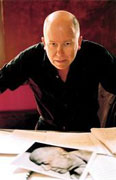
Mark Alburger Dr. Mark Alburger is the Music Director, Conductor and founder of the San Francisco Composers Chamber Orchestra. Mark is an eclectic American composer of postminimal, postpopular, and postcomedic sensibilities. He is the Music Director of Goat Hall Productions / San Francisco Cabaret Opera, Editor-Publisher of 21st-Century Music Journal, an award-winning ASCAP composer of concert music published by New Music, Instructor in Music Theory and Literature at Diablo Valley College, Music Critic for Commuter Times, author, musicologist, oboist, pianist, and recording artist.
Dr. Alburger studied oboe with Dorothy Freeman, and played in student orchestras in association with George Crumb and Richard Wernick. He studied composition and musicology with Gerald Levinson, Joan Panetti, and James Freeman at Swarthmore College (B.A.), Karl Kohn at Pomona College, Jules Langert at Dominican College (M.A.), Tom Flaherty and Roland Jackson at Claremont Graduate School (Ph.D.), and Terry Riley.
       Since 1987 he has lived in the San Francisco Bay Area, initially producing a great deal of vocal music with assembled texts, including the opera Mice and Men (1992), the crisis-madrigal collection L.A. Stories (1993), the rap sheet For My Brother For My Brother (1997), and the hieratic Passion According to Saint Matthew (1997).

Since 1997, Dr. Alburger has gridded and troped compositions upon pre-existent compositions ranging from world music and medieval sources to contemporaries such as George Crumb and Philip Glass. To date, he has written 16 concerti, 7 masses and oratorios, 12 preludes and fugues, 20 operas, 6 song cycles, 9 symphonies -- a total of 130 opus numbers and more than 800 individual pieces. He is presently at work on Waiting for Godot and Diabolic Variations.

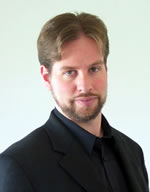
Dr. Erling Wold is the Executive Director of the San Francisco Composers Chamber Orchestra and is a prolific composer versed in a variety of musical styles and media. Recent performances include a Mass for the Dom Cathedral in St Gallen, Switzerland, a dance opera on a true crime story with Palindrome Dance in Germany, and a solo opera for tenor John Duykers. He is now working on an autobiographical opera with the help of James Bisso. He premiered his opera Sub Pontio Pilato, an historical fantasy on the death and remembrance of Pontius Pilate in San Francisco and Austria. He completed a residency at ODC Theater in 2001 with a presentation of a chamber opera based on William Burroughs' early autobiographical novel Queer and a restaging of his critically acclaimed work A Little Girl Dreams of Taking the Veil, based on the Max Ernst collage novel. He is an eclectic composer whose teachers include Gerard Grisey, Robert Gross, Andrew Imbrie and John Chowning, but who has been called "the Erling WoldEric Satie of Berkeley surrealist/minimalist electro-artrock" by the Village Voice. He composed the soundtracks for a number of Jon Jost films.

He has published technical and artistic articles in many publications, including IEEE MultiMedia, Proceedings of the ICMC, SIGGRAPH, the JI Journal 1/1, and the IEEE Transactions on Computers. He has five patents in musical signal processing, holds a doctorate from the University of California at Berkeley and was a researcher in signal processing and music synthesis at Yamaha Music Technologies before cofounding Muscle Fish LLC, an audio and music software company.

John Kendall Bailey John Kendall Bailey is an Associate Conductor with the San Francisco Composers Chamber Orchestra and is Principal Conductor and Chorus Master of the Trinity Lyric Opera, Music Director and Conductor of Voices of Musica Sacra, and Artistic Director of the San Francisco Song Festival. In 1994, Mr. Bailey founded the Berkeley Lyric Opera and served as its Music Director and Conductor until 2001. Since then he has been a guest conductor with the Oakland East Bay Symphony, Oakland Youth Orchestra, and Oakland Ballet, and music director and conductor for productions with North Bay Opera, Mission City Opera, Goat Hall Productions, Solo Opera, the Crowden School and Dominican University. From 2002-2006 he was the Chorus Master of the Festival Opera of Walnut Creek. Mr. Bailey is also a composer, and his works have been performed and commissioned in the Bay Area and abroad.
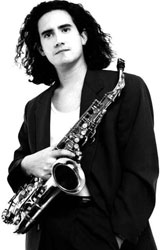
Mr. Bailey also maintains a busy performance schedule as a bass-baritone, oboist, and pianist, and has performed with the San Francisco, Santa Rosa, Oakland East Bay, Berkeley, Redding, Napa, Sacramento, and Prometheus symphonies, American Bach Soloists, Philharmonia Baroque Orchestra, the Midsummer Mozart and West Marin music festivals, San Francisco Bach Choir, Coro Hispano de San Francisco, Pacific Mozart Ensemble, California Vocal Academy, San Francisco Concerto Orchestra, Masterworks Chorale of San Mateo, Baroque Arts Ensemble, San Francisco Korean Master Chorale, the Master Sinfonia, the Mark Morris and Merce Cunningham dance companies, Goat Hall Productions, Opera Piccola, the Berkeley, Golden Gate, and Oakland Lyric Opera companies, and many other groups. He has recorded for the Harmonia Mundi, Koch International, Pro Musica, Wildboar, Centaur, and Angelus Music labels.

Mr. Bailey has been a pre-performance lecturer for the Oakland East Bay Symphony and the San Francisco Opera, a critic for the San Francisco Classical Voice, a writer of real-time commentary for the Concert Companion, and has taught conducting at the University of California at Davis.

Martha Stoddard, Associate Conductor earned her Bachelor of Arts degree at Humboldt State University and her Master of Music degree from San Francisco State University, where she studied flute, conducting and composition. She is a 2009 Recipient of the Ascap Plus Award and her music has been performed for the San Francisco Chapter of the American Composer⤙s Forum, by the Avenue Winds, in London, UK, by alto flutists Carla Rees and Lisa Bost, the San Francisco Choral Artists, San Francisco Composers⤙ Chamber Orchestra, Schwungvoll!, the Community Women⤙s Orchestra, Oakland Civic Orchestra, Womensing, on the New Directions Series of the Bakersfield Symphony, in the Trinity Chamber Concert Series and the New Music Forum Festival of Contemporary Music. Martha Stoddard Her most recent commissions include  today's premiere  and her Trio for Clarinet,Cello and Piano for the 2009 San Francisco Chamber Wind Festival at the San Francisco Conservatory. She has held the position of Artistic Director of the Oakland Civic Orchestra since 1997. Other recent conducting activities include engagements as Conductor for the John Adams Young Composers⤙ Orchestration Workshops at the Crowden School, Musical Director for the operas Belfagor and Trap Door by Lisa Prosek, Guest Conductor for the San Francisco All ⤓ City High School String Orchestra and the Santa Rosa Youth Symphony Summer Academy Orchestra. She has also served as an adjudicator for the San Francisco Conservatory of Music and Santa Cruz Youth Symphony Concerto Competitions.   Ms. Stoddard is founding member and director of ChamberMix, and is a featured performer on alto flute in John Bilotta⤙s Shadow Tree (Capstone Records CPS-8787) and in John Thow⤙s Cantico  (Palatino label #1001) Marika Kuzma, conductor, and as conductor  for Janis Mercer⤙s, Voices (Centuar Recordings, CPS 2951).

Lisa Scola Prosek Lisa Scola Prosek is the General Manager of the San Francisco Composers Chamber Orchestra and was raised in Rome, Italy, and began studying piano at the age of 4. After moving to the United States at the age of 11, Lisa graduated from Princeton University, where she studied with Edward Cone and Milton Babbitt, and privately with Lukas Foss in New York. During this time, Lisa developed a great love for the voice, and studied singing with Margherita Kalil of the Met. After Princeton, Lisa returned to Italy, where she attended the Conservatorio Luigi Cherubini, and studied with composer Gaetano Giani-Luporini. To date, Scola Prosek has composed two oratorios, and 5 operas, in Italian and English, including Satyricon, reviewed by the San Francisco Observer as a "Tour de Force" and featured on KRON TV; and Leonardo's Notebooks, in Italian, both of which premiered to capacity audiences, and were featured on NPR's West Coast Live. The Contemporary Classical Music Weekly writes: "This composer's work is steeped in the Mediterranean world of gestures, writ both big and small. Her vocal writing references bel canto and the madrigal, and the instrumental writing, with its shadowy inner voices, has character and point. Intricate and highly expressive music." Sequenza 21. Lisa Scola Prosek is the recipient of numerous grants and awards, including from the Argosy Foundation, for Belfagor, and from the LEF Foundation, Meet The Composer, The Hewlett Foundation, the Argosy Contemporary Music Fund, and the American Composers Forum for her opera Trap Door.

Michael CookeMichael Cooke is the Promotion & Fundraising Director of the San Francisco Composers Chamber Orchestra and a composer of jazz and classical music. This two-time Emmy and Louis Armstrong Jazz Award winner plays a variety of instruments: you can hear him on soprano, alto, and tenor saxophones, flute, soprano and bass clarinets, bassoon and percussion. A cum laude graduate with a music degree from the University of North Texas, he had many different areas of study; jazz, ethnomusicology, music history, theory and of course composition. In 1991 Michael began his professional orchestral career performing in many north Texas area symphonies. Michael has played in Europe, Mexico, and all over the United States. Cimarron Music Press began published many of Michael's compositions in 1994.
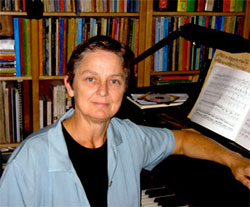
After relocating to the San Francisco Bay Area, he has been exploring new paths in improvised and composed music, mixing a variety of styles and techniques that draw upon the creative energy of a multicultural experience, both in and out of America. In 1999, Michael started a jazz label called Black Hat Records. The San Francisco Beacon describes Michael's music as "flowing out color and tone with a feeling I haven't heard in quite a while. Michael plays with such dimension and flavor that it sets (his) sound apart from the rest." Uncompromising, fiery, complex, passionate, and cathartic is how the All Music Guide labeled Michael's playing on Searching by Cooke Quartet, Statements by Michael Cooke and The Is by CKW Trio. His latest release, An Indefinite Suspension of The Possible, is an unusual mixture of woodwinds, trombone, cello, koto and percussion, creating a distinct synergy in improvised music that has previously been untapped. www.michaelkcooke.com

Rachel CondryRachel Condry is the Booking Manager of the San Francisco Composers Chamber Orchestra. She has spent her career commissioning, premiering and performing new works for solo clarinet, clarinet with tape and clarinet and orchestra. In the spring of 2005 she made her Carnegie Hall debut with The Matt Small Chamber Ensemble, a group that seamlessly blends jazz, improvised music and classical genres. As a performing member of the San Francisco Composer’s Chamber Orchestra, Rachel premiered the Cello Concerto of Thomas Goss on Bass clarinet in 2003 and in 2005 she premiered Erling Wold’s work “Brightness” for solo clarinet and orchestra. She has independently produced several concerts comprised of recent and newly commissioned work for clarinet and bass clarinet by Bay Area composers such as Earl Zindars, Erling Wold, Andrew Shapiro, Lisa Prosek, Janis Mercer, Jono Kornfeld, Melissa Hui, Alexis Alrich and others. Rachel received a Bachelor of Music degree from Oberlin Conservatory where she was a finalist of the Oberlin Concerto Competition and was a soloist with the Oberlin Contemporary Music Ensemble.

David Graves is the Coordinator of the San Francisco Composers Chamber Orchestra. He has composed music for multiple genres, including "neoclassical," ambient, jazz, and rock. He has also scored music for film and theatre, including A Period Piece, performed in San Francisco and New York (1995-1998) and ICON: The Photography of Gordon Parks (2003), a movie by PCTV. In 2003 and 2005 he was a resident composer at the David GravesDjerassi Resident Artist Program where he was awarded the William and Flora Hewlett Foundation Fellowship. Deciduous, a large-scale surround sound performance, was showcased in 2006's Soundwave>Series. He will be performing Human Street Textures, an electronic piece for moving AudioBus, in the Soundwave>Series this summer along with [ruidobello]. He is currently an Emerging Composer-in-Residence with the Berkeley Symphony.